Scientists have created a unique genetic database that could aid in bee breeding
7. 2. 2025
The results of a long-term study on the genetic diversity of the honeybee population have been presented by geneticists from the Faculty of Agronomy. Their research focused primarily on identifying DNA polymorphisms suitable for selecting bees based on their resistance to diseases. This has led to the creation of a unique genetic database. The collected data could one day be used in breeding bees for increased disease resistance.
The genetic variability of the honeybee population in the Czech Republic had not been thoroughly studied before. This motivated a team of scientists from the Faculty of Agronomy to create a representative sample.
“We divided the entire Czech Republic by regions and districts, collecting an equal number of samples from each geographical area. This resulted in a unique database containing over 5,000 bee samples from across the country,” explained Tomáš Urban from the Institute of Morphology, Physiology, and Animal Genetics at Mendel University in Brno.
With this dataset, scientists were able to systematically analyze the genetic diversity of bees in the Czech Republic. “Historically, the so-called black bee, Apis mellifera mellifera, was traditionally adapted to the area of today’s Czech Republic. Around 200 years ago, a new bee type was gradually imported from the south, from what is now Croatia and Slovenia. This was the Carniolan honeybee, Apis mellifera carnica, which was less aggressive and had higher honey yields. Through mitochondrial DNA analysis, we found that the haplotype of the black bee is no longer present in our samples,” Urban described, suggesting that the native species once typical for the region has likely disappeared.
The historical import of bees from southern Europe had a breeding purpose, but molecular genetics is now expanding its potential. Thanks to the newly developed genetic database, scientists have not only mapped the diversity of honeybee mitochondrial and nuclear DNA in the Czech Republic but also identified genetic differences in individuals that may have higher resistance to diseases. This could be useful in future breeding efforts, particularly against Varroa destructor infestations.
“In Germany, England, and the Nordic countries, there have been efforts to gradually increase the resistance of bee colonies, but practical success has been limited so far. This is due to the complexity of the bee immune response and behavioral traits. That is why it is necessary to systematically search for genes that may be responsible for better resistance to pathogens. This was another key part of our research,” Urban added.
The research team has developed certified methodologies for testing individual bees using microsatellite markers. These markers allow for the identification of bees and the monitoring of their genetic variability in populations. The second methodology can also help identify bees that may have higher resistance to pathogens—an essential step for future breeding programs focused on Varroa resistance.
For more information, contact: Prof. Ing. Tomáš Urban, Ph.D., tomas.urban@mendelu.cz, +420 545 133 182, Institute of Morphology, Physiology, and Animal Genetics, Mendel University in Brno
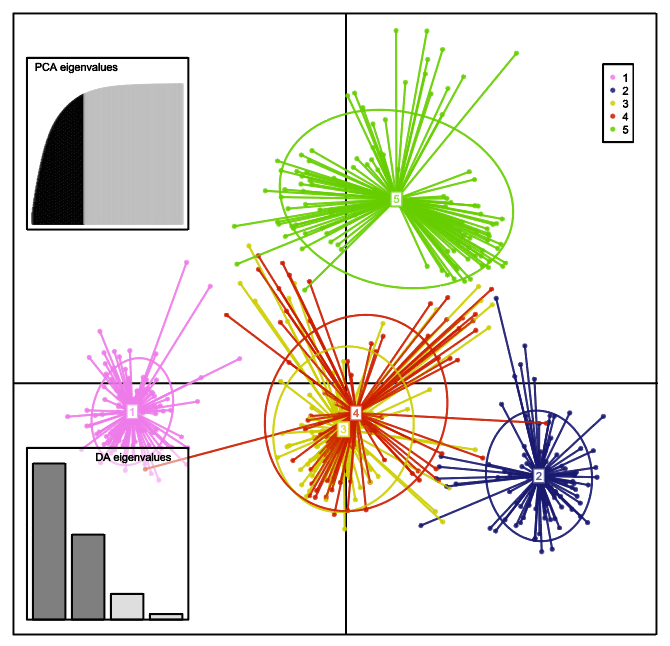
Estimated genetic clusters representing population structure
We work with cookies. Why? We analyse traffic and events on the website so that we can continually improve it. We also need cookies to provide social media features and to customise the content of ads. With consent, we may also pass some personal information to marketing platforms for marketing purposes.
About Cookies
Cookies are small text files in which websites can store information about your activity on the website and user preferences. They are used, for example, to make the browser remember your login, the consent settings in the cookie bar and, with your consent, various marketing and analytical information.
Necessary
These cookies ensure the basic technical functionality of the website, are necessary for the proper functioning of this website and are always active.
Analytical
We use third-party tools to track traffic. According to Google Analytics settings, personal data may also be sent.
Preferential
They store your personal settings, such as the language in which information is displayed, or allow you to offer content tailored to your needs.
Marketing
We are using third-part marketing cookies and your personal data to show you content customized to what you have viewed on our website. The content can be viewed elsewhere on the Internet. You can disagree with using of our marketing cookies but it will not reduce the extent of advertising offers you see, you will only see more of uninteresting and irrelevant ad to you.